

Over the past few months, I’ve found myself reflecting quite a lot on the idea of stability.
Our boys, Lawrence and Seymour, are now one and three years old, and for the first time in what feels like a very long time, life has become a little more predictable. We’re no longer deep in the newborn trenches, where every day felt like survival and every uninterrupted stretch of sleep felt like a minor miracle.

It’s not something that happened overnight. There wasn’t a particular morning when we woke up and declared, “We’ve made it.”
Rather, it happened gradually.
The early wakes became less frequent. Bedtimes became easier. The boys started sleeping through the night more consistently. Best of all, they have begun to genuinely enjoy each other’s company. Watching them play together, laugh together, and chase Daddy onto the rugby pitch has been one of the sweetest parts of this stage of family life.
Our focus has quietly shifted from survival to enjoyment.
We have stability… for now.
Book your consultation
Watching our boys grow has reminded me that the things we value most are often built slowly. Strong relationships, healthy habits, confidence and resilience none of them appear overnight. They emerge gradually, almost unnoticed, until one day you look around and realise life feels calmer, easier and more secure than it once did.
I’m starting to see that more and more at the practice too.
My own dentist had a plaque on the wall that simply read:
“Floss the teeth you want to keep.”
Twenty years later, that message still rings true.

Increasingly, I find myself seeing long-standing patients for their routine examinations, taking their x-rays, checking their gums, and then having the pleasure of telling them that everything looks healthy and no treatment is needed.
Many of these patients would once have expected a filling, a repair or some other intervention. Instead, their appointments have become about maintaining health rather than restoring it.
What they’re experiencing is something we call dental stability.
Like family stability, it rarely arrives suddenly.
It develops gradually over time as small habits settle into place and become part of everyday life. Careful brushing for two full minutes twice a day. Cleaning between the teeth daily. Being mindful of sugar. Attending routine appointments so that small problems can be identified early and addressed before they become bigger issues.
Book your consultation
Eventually, a tipping point is reached.
The mouth becomes calm.
Teeth remain strong. Gums stay healthy. Appointments become less about fixing problems and more about protecting what is already working well.
For us as dentists and hygienists, these moments are deeply satisfying. They tell us that the partnership between patient and practice is working exactly as it should.
For patients, it often brings a quiet realisation:
Good dentistry is not simply about treatment. It’s about reaching a point where treatment is rarely needed at all.
When treatment is rarely needed, the lifetime cost of dental care is dramatically reduced. Less time is lost from work, fewer appointments are required, and there is far less anxiety about what might happen when you sit back in the chair.
Book your consultation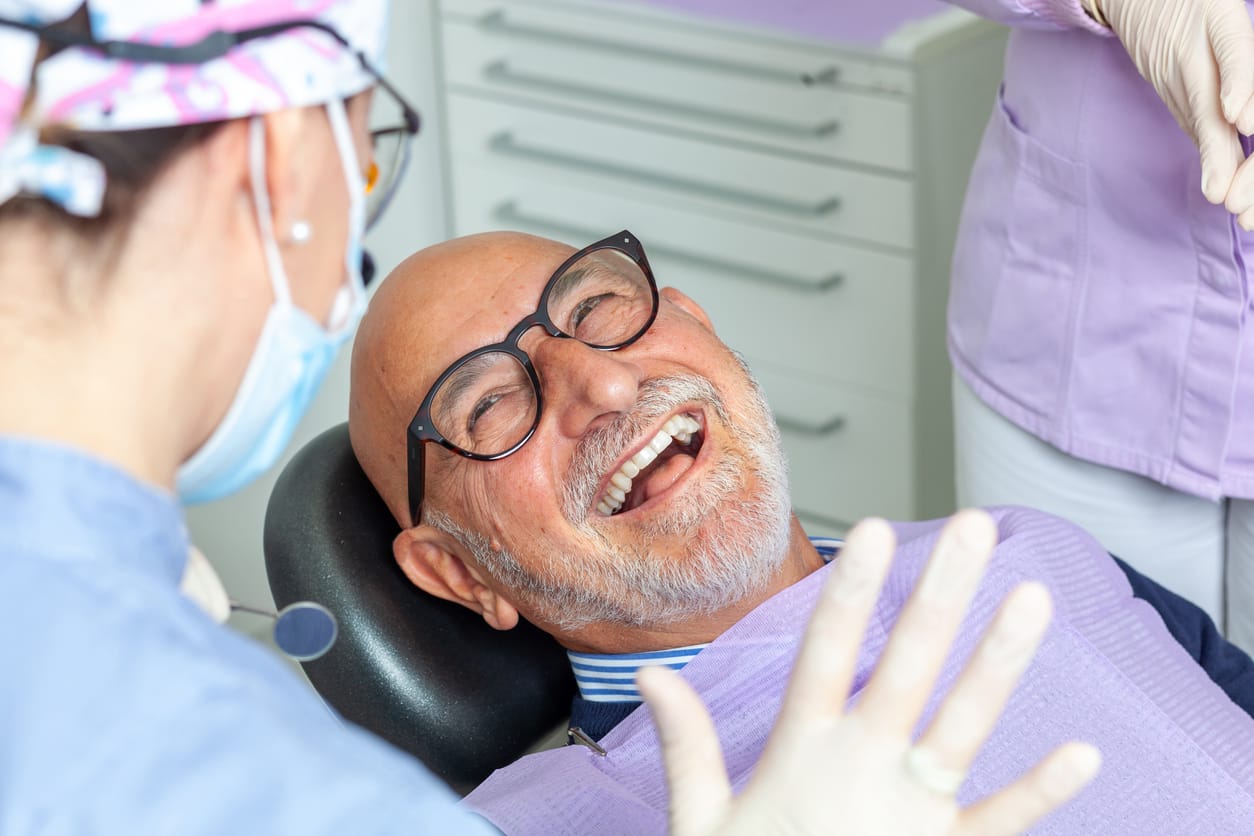
For dental stability to be achieved and maintained, regular attendance is essential. We carefully determine the ideal examination and hygiene recall interval for each patient based on their individual level of risk. That interval takes into account many factors, including age, general health, previous dental history, lifestyle habits and individual susceptibility to dental disease.
When appointments become stretched beyond the recommended interval, there is a risk that dental stability can begin to slip away. The challenge is that it can be difficult to appreciate the value of problems not happening, or to quantify the benefit of avoiding treatment that never becomes necessary.
One of the simplest ways to preserve dental stability is to book your next appointment before leaving the practice. Even if it is a year away, arrangements can always be adjusted nearer the time. Having that appointment secured makes it much easier to stay on track without needing to think about it later.
If you value dental stability, please do this. It genuinely makes a huge difference to the long-term health of your teeth and significantly increases the likelihood that they will serve you well into old age with very little trouble.

As always, Tom and I are truly grateful that you continue to place your trust in us and our team. It is a privilege to care for you and your families, and we never take that trust for granted.
It really does mean the world.
All the best,
Hanifa

We’re here to help if you need us. Simply fill in the form below and a member of our friendly team will be in touch.